
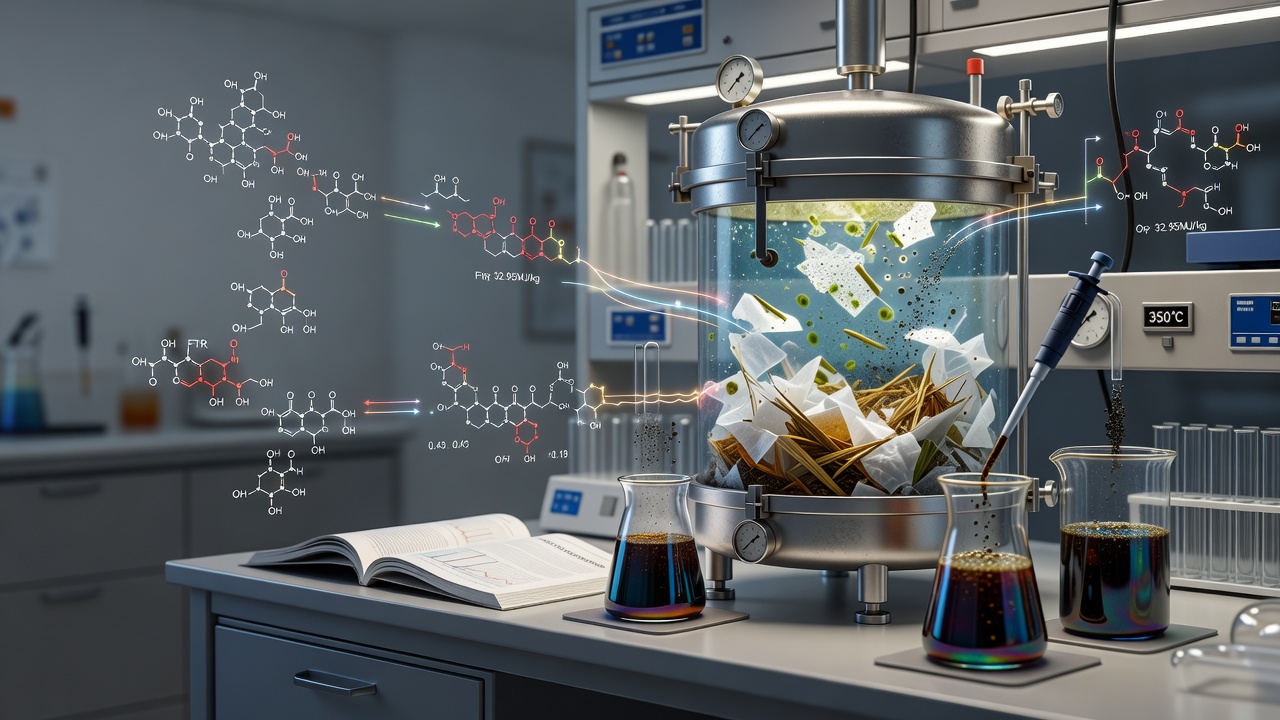
A laboratory study reports that mixing polypropylene manufacturing waste with biomass such as sawdust, rice straw and algae can produce a liquid fuel with noticeably more energy per kilogram. The work was published in the journal Biotechnology for Biofuels and Bioproducts and was led by Sukanya Hongthong and Surachai Wongcharee. For American readers, it is a research result, not a product on the market.
How the process works
The team used a method called co-hydrothermal liquefaction. In this process, hot, pressurized water breaks down mixed feedstocks into a crude-like liquid known as bio-crude. The experiments ran at 350 degrees Celsius under subcritical water conditions, meaning the water stayed liquid under high pressure rather than becoming steam. The researchers also used a catalyst made from industrial waste.
The researchers paired polypropylene, a common plastic found in packaging, containers and many manufacturing scraps, with three biomass feedstocks: sawdust, rice straw and Chlorella, a microscopic alga. Plants and algae are rich in oxygen-containing compounds, and those compounds lower the energy density of the oil they produce. The team wanted to see whether the plastic could offset that problem.
What the measurements showed
According to the study, adding polypropylene significantly improved the fuel's characteristics. The highest reported higher heating value reached 32.95 megajoules per kilogram. The atomic oxygen-to-carbon ratio fell from 0.43 to 0.19, which signals less oxygen in the product. The researchers also used FTIR spectroscopy and Van Krevelen analysis, two standard chemical tests, which indicated more hydrocarbon-like compounds and fewer oxygen-containing groups after the catalytic treatment.
Put simply, the oil moved closer in composition to fossil crude. Hydrocarbons are the carbon-and-hydrogen molecules that make petroleum valuable as fuel, so a shift toward them is the central finding.
Context and limits
This is a small-scale experiment, and the reported numbers come from specific feedstock mixtures and conditions. The study does not establish that the process would be economical, that the catalyst could be produced cheaply at volume, or that the resulting fuel would meet the standards required for vehicles or refineries in the United States. Converting bio-crude into finished transportation fuel usually requires further upgrading, and the study's scope does not address that step.
The research also does not show that plastic waste is a solution to plastic pollution. Turning polypropylene into fuel still releases carbon when burned, and the study does not compare its emissions with those of other disposal or recycling routes. Whether this pathway would reduce waste or simply create a new use for it depends on factors the experiment did not measure.
For households, the near-term implication is modest: the work illustrates research interest in using hard-to-recycle plastics and farm residues such as rice straw and sawdust. Any future commercial deployment would need independent testing, environmental assessment and regulatory review before it could affect everyday fuel supply.